

Is Your Night Shift Prepared? 5 Gaps Found in Most Spill Drills
- robbie jones
- Apr 8
- 2 min read

The Scene: It’s 2:00 AM on a Tuesday. A forklift punctures a drum of hazardous liquid. The Environmental Manager is asleep.
The Reality Check: Most companies have great spill kits, but kits don’t stop spills—people do. If the response relies on the "office hours" team, the site is at risk.
The Goal: This post identifies the 5 common failures we see during unannounced drills and how to fix them before the regulator (EA/EPA) gets involved.

Section 1: The "Muscle Memory" Gap
The Problem: Training often happens in a classroom once a year. In a real emergency, adrenaline takes over and people forget where the kits are or how to deploy socks correctly.
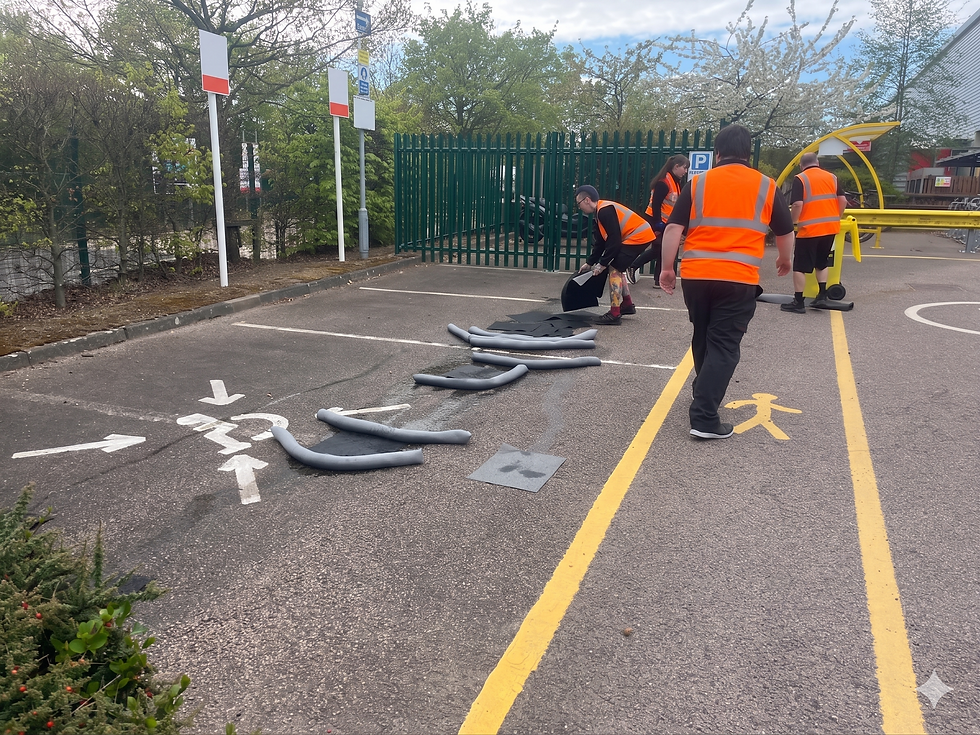
The Fix: Move from "PowerPoint training" to "Practical Drills." Short, 20-minute "toolbox talks" held at the actual site of a potential spill.
Section 2: The "Drainage Knowledge" Deficit
The Problem: Staff know how to throw a mat on a spill, but do they know where that liquid is headed? Most don't understand the site’s topography or which drains lead to the foul sewer vs. a local watercourse.
The Fix: Ensure training includes a "Flow-Path Walk." Every responder should know the "Point of No Return" for a spill on your site.
Section 3: The PPE Hesitation
The Problem: During drills, people often skip the PPE step to save time. In a real event, this leads to hesitation ("Is this glove rated for this acid?") or, worse, injury.
The Fix: Use expired or "training-only" PPE during drills so staff get comfortable with the physical constraints of responding in gear.
Section 4: Communication Breakdowns
The Problem: Who gets called first? The manager? The fire department? The clean-up contractor? If the "Emergency Contact List" is buried in a folder in an office that is locked at night, the response fails.
The Fix: Transition to "Action Cards"—laminated, simplified instructions kept inside the spill kits, not in the manager's office.
Section 5: The "One-and-Done" Mentality
The Problem: Treating spill training as a "check-the-box" annual task for ISO 14001.
The Fix: Implement a "Near-Miss" culture. Every small drip is an opportunity for a 5-minute response refresh.
Not sure if your night shift is ready? We accommodate training at any time of the day - reach out on LinkedIn or via our website to enquire.


Comments